

Budget for a Disney trip: how much it really costs and where your money goes
Let us be straight: Disney can be the most magical trip of the year... and also the one that leaves you thinking "wait, where did all our money go?" if you do not plan it well.
And it is not because Disney is "super expensive" by default. It is because it is a destination full of small temptations and decisions that seem mini, but add up fast: a snack here, a drink there, "we are just going in to look" at a shop, an extra that sounds innocent, and suddenly the budget went for a ride.
The good news: with a simple structure, you can have a Disney trip budget Realistic, calm, and without losing the magic. In fact, when you have it all tied down, you enjoy it more. Because you don't have that mental nagging feeling of "don't look at the bank account".
Let's make it easy.
Who this guide is for (and who it isn't)
It's for you if...
You want to know what it really costs and avoid any surprises.
You're traveling with family and worried about "drip expenses".
You're going as a couple and want a romantic trip without overspending.
You're going without kids and want a great experience, but sensibly.
It gives you peace of mind to have clear numbers before traveling.
It won't be as useful if...
You don't care about the budget and prefer to improvise everything.
You're going with the "I'll figure it out there" mindset and zero planning.
If you like calm magic, this guide will fit you well.
First thing: what really determines the budget
A Disney budget isn't defined just by "how many days". It's defined by 4 decisions:
Destination and temporarily (dates change the cost a lot)
Number of park days (and how you distribute them)
Hotel and location (this impacts more than it seems)
Your travel style (relaxed, full-on, foodie, whimsical)
Before calculating, define your style in a sentence:
“I want to experience it calmly and without getting exhausted.”
“I want to hit the attractions, but with breaks.”
“I want a romantic trip with dinners and special moments.”
“I want it to be family-friendly, easy, and drama-free.”
If you tell us that sentence plus your approximate dates, we can help you land a realistic plan starting from Disney Budget.
The 6 categories of a Disney budget (the ones that really count)
If you want clarity, divide your budget like this. It's the simplest and most useful method.
1) Transportation
Includes flights, train, gas, transfers, and any major movement.
What usually happens:
The main transport is booked, but small transfers are forgotten.
If you're tight on time, you end up paying extra for convenience.
Sparky tip: leave a mini fund for “mobility.” It saves you stress.
2) Hotel
The hotel is the base of the trip. And yes, it's one of the biggest expenses.
What really matters:
Proximity and ease of getting to the parks.
Room type and actual comfort.
If it allows you to rest and reset midday.
This is important: a well-chosen hotel doesn't just cost money, it saves you money too. Because it prevents unexpected taxis, impromptu meals due to exhaustion, and the typical "I can't take it anymore" that makes you spend on quick fixes.
If your destination is Disneyland Paris, here you can see how we plan it in a personalized way in Disneyland Paris Trip, Tailoredfor You.
3) Tickets
Tickets are the "obvious" expense. But be careful, it's not just the price, it's how they fit with your days.
Typical mistakes:
Adding too many park days unnecessarily.
Going at such an intense pace that you end up "losing" hours due to exhaustion.
Real tip: sometimes 3 well-planned days are worth more than 4 rushed ones.
4) Meals (and snacks)
This is where the famous "ant spending" lives.
Disney has smells that convince you: popcorn, sweets, themed items that look at you and say “just one”. And you, being human, say yes.
How you lose money here:
Constant drinks (especially when it's hot)
Repeated snacks because you walk a lot
A meal “out of hunger” that ends up being more expensive
The key isn't “don't spend.” The key is to decide beforehand:
Do you want a special meal per day or just a few?
Do you prefer to eat quickly or take your time?
Are you going to snack a lot or will you control it?
With a simple decision, the budget becomes much more stable.
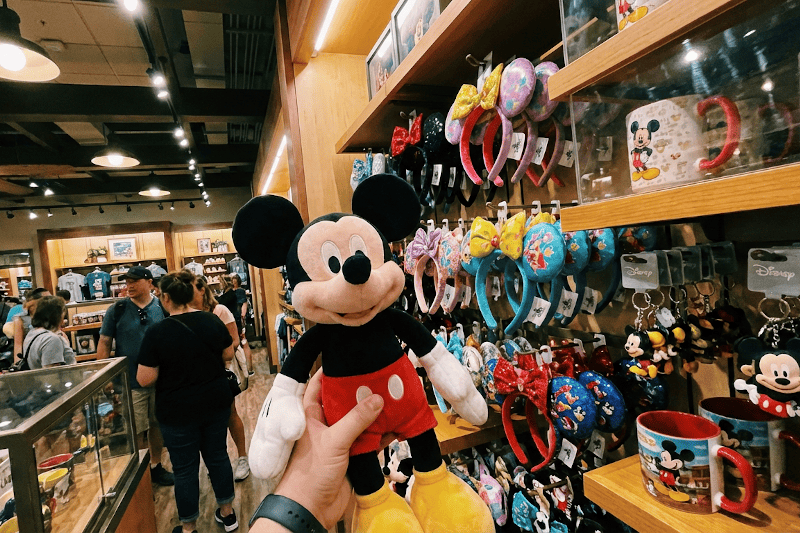
5) Extras and purchases
Souvenirs, photos, experiences, treats.
This section breaks budgets when it has no limits. And not out of malice, but because Disney is designed so that everything seems adorable.
Trick that always works:
Daily budget for treats (even if it's small)
One “big” purchase chosen with intention (if you want it)
Golden rule: don't buy in anxiety mode, buy in “I love it” mode
6) Unexpected expenses
It doesn't sound magical, but it's the most magical thing for your peace of mind.
Typical unexpected expenses:
A rainy day and you need ponchos or an extra layer
Sore feet and you buy something to save the day
“We have to move fast” and you pay for transportation
A child isn't feeling well and you buy basic necessities
Set aside 5 to 10 percent of the total for unexpected expenses. That cushion gives you peace.
How much does a Disney trip cost? The honest answer
It depends. And I'm not saying that to get out of it, I'm saying it so you can calculate it well.
More useful than giving you an exact number is giving you a range by style:
“Well-controlled” trip
Practical hotel
Simple meals with a special one
Measured splurges
Plan in blocks with breaks
Result: you enjoy a lot without the budget going through the roof.
“Full experience” trip
Better hotel or location
More leisurely meals
More extras and shopping
More special moments
Result: more spending, but also more “great moments”.
The important thing is to choose what kind of trip you want. Because if you want the full experience with a controlled budget, there are strategies. And if you want a controlled trip with magic, there are those too.
Where your money disappears without you noticing (the 7 silent thieves)

Drinks and snacksevery few hours
Impulse buys in
Impromptu meals due to hunger
Moving around without a strategy and paying for convenience
Small, repeated extras (and they add up!)
Not planning breaks and spending on "quick fixes"
Not setting a limit for splurges
The solution isn't to cut everything out. It's to put structure in place.
How to save without ruining the magic (real tips)
Tip 1: choose your "yeses" before you travel
Decide:
1 or 2 special meals (if you feel like it)
1 themed splurge that you're excited about
1 experience you want to remember
When you decide beforehand, you spend better.
Tip 2: plan in blocks to avoid buying out of tiredness
When you're exhausted, you spend worse. Literally.
If you take a midday break, your spending goes down:
you buy less on impulse
you eat more mindfully
you enjoy the rest of the day more
Tip 3: daily budget for extras
Even if it's small. This prevents the endless "while we're at it..."
Tip 4: one nice purchase instead of ten small ones
This is very adult Disney. Choosing something with intention feels better.
Tip 5: plan by zones
Fewer unnecessary walks, fewer "I need a drink now," less tired shopping. Everything is connected.
Examples of budgets by trip type (to help you visualize)
I'm not giving you exact prices because they vary by dates, hotel, and destination, but I am giving you structures so you can visualize it.
Example A: couple, 3 to 4 days
Transportation: set with a buffer for transfers
Hotel: comfortable, designed for rest
Tickets: adjusted to your pace
Meals: 1 special dinner, the rest flexible
Extras: small daily budget for treats
Unexpected expenses: 5 to 10 percent
Result: romantic, elegant, no feeling of rush.
Example B: family with kids, 4 to 5 days
Hotel: prioritize rest and easy logistics
Meals: planned to avoid hunger meltdowns
Extras: one controlled treat per day
Contingency: a bit higher, because with kids, things always happen
Result: easy trip, no endless queues due to poor organization, and no drama.
Example C: adults without kids, 2 to 3 intense days
Tickets: well-chosen
Meals: one quiet meal a day to reset
Extras: budget for merch or a specific experience
Result: living at another level, but with common sense.
If you want us to put together your exact budget based on dates, destination, and style, the easiest way is to request it from Disney Budget and we'll finalize it with you.
Mini checklist to make your budget “surprise-proof”
I have my travel style clearly defined
I've separated categories: transportation, hotel, tickets, meals, extras, contingency
I have a daily budget for splurges
I have at least one leisurely meal a day
I've set aside a buffer for unexpected expenses
I've planned breaks to avoid spending out of tiredness
With that, the trip feels light.